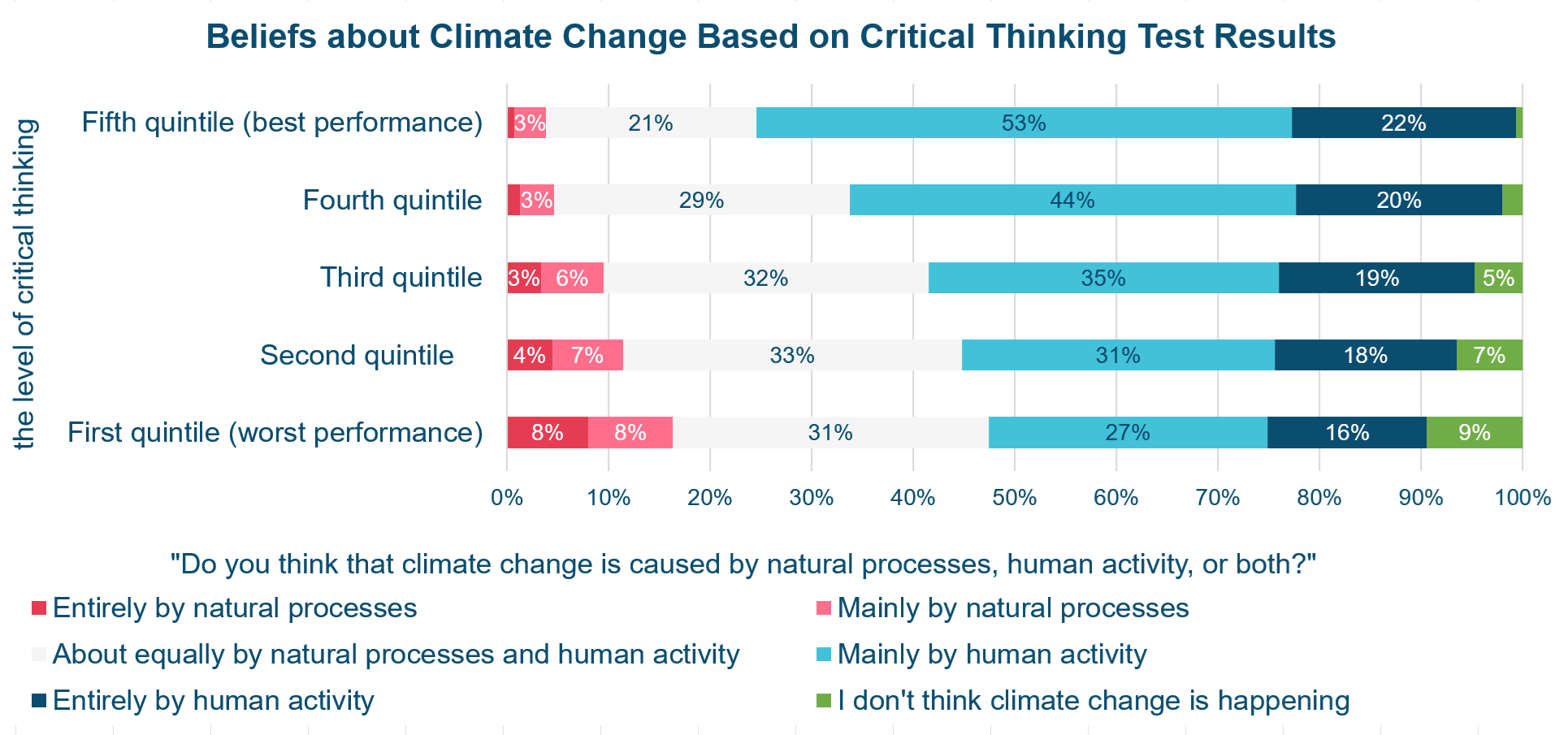
When exploring the results of the first wave of CZEPS, we focused, among other things, on differences in opinions on the causes of climate change among adolescents. The graph shows the relation between beliefs about climate change and levels of critical thinking as measured by the test of critical thinking in the fall of 2023. The results, which include responses from 21,097 students, show that adolescents with higher levels of critical thinking (fifth quintile) are more likely to believe that climate change is primarily caused by human activity (53 %), while this belief is less common (27 %) among students with the lowest levels of critical thinking (first quintile). On the contrary, students with lower levels of critical thinking have a higher tendency to believe that climate change is caused solely by natural processes or to not believe that it is happening at all. This relation shows the importance of developing critical thinking skills to improve young people’s understanding and acceptance of scientific data about climate change.