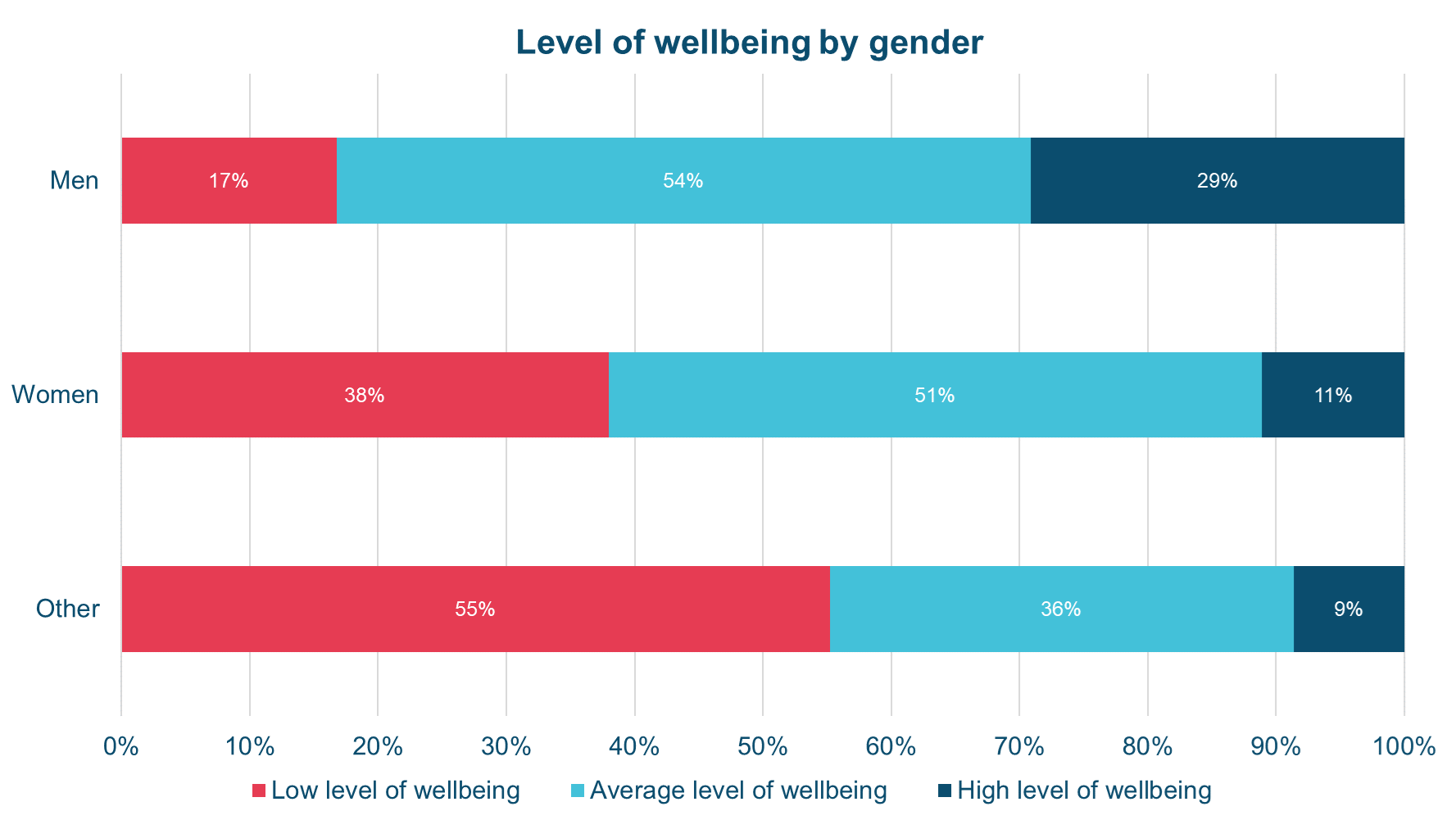
The first CZEPS wave included the topic of well-being. We measured well-being through a global standardized happiness scale comprising seven items. We were specifically interested in whether levels of well-being vary with gender. Based on responses from 22,335 first-year students at high schools, we can conclude that there is a certain connection between the two variables. The results showed that almost two-fifths (38 %) of girls have a low level of well-being, more than half (51 %) have a medium level of well-being and only 11 % have a high level of well-being. The situation with boys is significantly more positive with 29 % of boys having a high level of wellbeing, over half (54 %) having a medium level, and less than one-fifth (17 %) having a low level. Our results also showed that the majority (55 %) of students who identify as other gender than male or female have a low level of well-being. We will measure well-being in each wave of our survey to monitor whether its levels in students change throughout their high-school studies and what factors are behind this change.