Loneliness in adolescence is a growing problem, often referred to as the loneliness epidemic. Loneliness is a state of mind, not just physical isolation. It is a subjective feeling of a lack of social contact and intimacy, regardless of the number of social interactions a person has. Although social isolation (lack of contact) can contribute to loneliness, it is not the same thing. An adolescent can be socially isolated without feeling lonely, and conversely, they can feel lonely even when surrounded by others. Long-term feelings of loneliness can lead to mental and physical health problems.
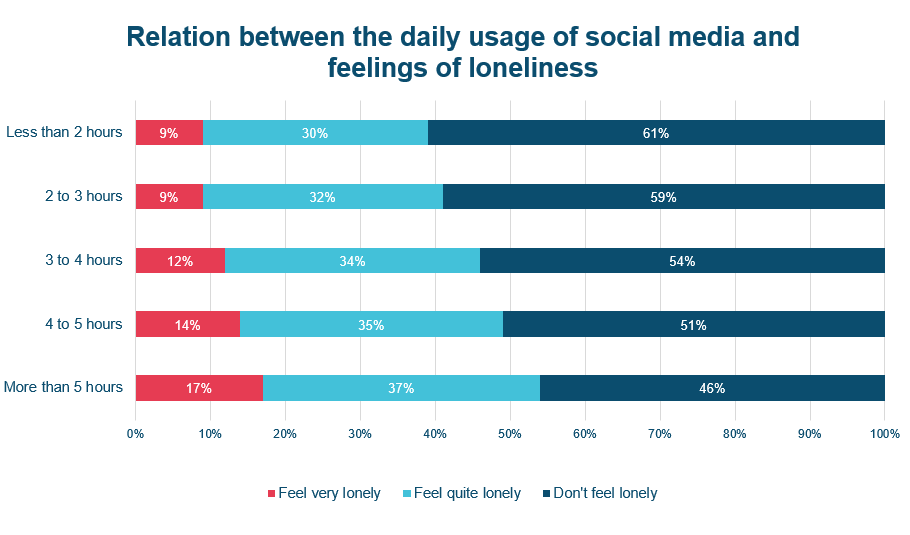
As part of the second wave of the CZEPS survey, carried out in autumn 2024 on a sample of 20 057 respondents, we investigated feelings of loneliness among students in Czech high schools. The results showed that 12% of adolescents felt “very lonely”, 33% felt “quite lonely”, and 55% did not feel “lonely at all”. In our analysis, we also looked at the association between the daily usage of social media and the level of loneliness experienced by adolescents.
The graph shows that the more time adolescents spend on social media, the stronger their feelings of loneliness. Nearly 17% of adolescents who spend more than 5 hours a day on social media feel "very lonely." Conversely, 61% of adolescents who spend less than 2 hours a day on social media "do not feel lonely at all." It is important to emphasize that this analysis does not indicate whether social media use directly causes loneliness. Foreign research suggests that this is a complex, two-way relationship: social media can promote contact and reduce isolation, but excessive use can also deepen feelings of loneliness. At the same time, it is possible that lonely individuals use social media more often or in a way that replaces interactions in everyday life.